

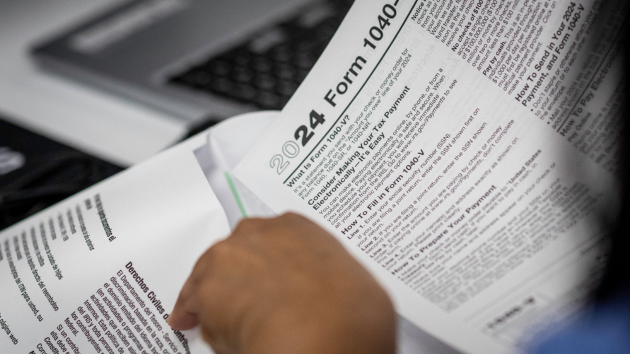
(NEW YORK) — Tax season kicked off this week as the U.S. Internal Revenue Service began allowing filers to submit completed tax forms.
Americans can file anytime before April 15. The IRS said earlier this month that it expects more than 164 million individual tax returns to be filed by that deadline.
Refunds are typically sent within 21 days, the agency says. For paper returns, the IRS says turnaround time can last more than four weeks.
Some tax filers can avail themselves of new options associated with the “One Big Beautiful Bill” enacted last year.
“Tax season 2026 brings some of the most significant tax code changes we’ve seen in years,” Alison Flores, director of the Tax Institute at H&R Block, said in a statement.
“The ‘One Big Beautiful Bill Act’ makes some rules permanent, introduces new ones, and creates a complex mix of deductions and credits that will impact the take-home pay of nearly every American,” Flores added.
For the first time, taxpayers can enroll in so-called Trump accounts, deposits of $1,000 made by the federal government for every baby born between 2025 and 2028.
Filers can enroll through elections on IRS Form 4547 as part of their tax return. Families can contribute up to $5,000 each year, while employers can contribute up to $2,500 annually for each employee.
Seniors, meanwhile, may opt for a new $6,000 tax deduction — or $12,000 for a married couple — as part of an effort to ease the tax burden for older Americans, the IRS said.
Tipped workers can deduct up to $25,000 in “qualified tips” as part of the “No Tax on Tips” initiative. The IRS defines eligible tips as those that involve “voluntary cash or charged tips received from customers, including shared tips,” according to the agency’s website.
Taxpayers who received overtime pay last year may also deduct such income in accordance with a “No Tax on Overtime” effort. Filers may deduct up to $12,500 or $25,000 for joint filers, the IRS said.
Car-loan interest may also be deducted, though the policy does not apply to lease payments. The maximum annual deduction for car-loan interest is $10,000, the IRS said, but the option is unavailable for individuals who report $100,000 or more in gross income.
Standard deduction limits increased this year, allowing filers to shield larger sums from taxes. On its website, the IRS spells out the new deduction amounts available at different income levels.
Up to nearly three in 10 Americans waits until the last minute to file their taxes, according to a 2024 survey by IPX 1031, a tax advisory firm. That amounts to tens of millions of people.
Taxpayers can typically file an extension that lasts six months, meaning those who obtain an extension will be allowed to submit their tax forms without penalty until Oct. 15.
If a filer forgoes an extension and files late, the person risks additional fees for the tardy submission. The penalty amounts to 5% of the taxes owed for each month that the filing is late, up to a maximum of 25%.
Under such circumstances, the IRS mails a letter or notice alerting the filer of a late fee.
Copyright © 2026, ABC Audio. All rights reserved.


