

(WASHINGTON) — With a polarized political climate approaching the high-stakes 2026 midterm elections, more Americans are identifying as independents than ever before, according to a Gallup poll conducted throughout 2025.
A record-high 45% of Americans called themselves political independents in 2025. The figure is a record since Gallup started measuring in 1988 — with the previous high for independents at 43% in 2014, 2023 and 2024.
Gallup found that an equal share of Americans identified as Republicans and Democrats — 27% each.
These findings come as the midterm elections approach in November and several tight races are expected as Republicans in the House try to maintain their slim majority so they can work to push President Donald Trump’s agenda. Both Republicans and Democrats will have to appeal to independents to win any tight races nationwide.
Thomas Nickel, an 85-year-old who lives in California, told ABC News that he has been independent for several years after leaving the Democratic Party. Nickel left his former party because he said he believes Democrats have not pushed hard enough for issues that are “necessary” — specifically mentioning health care coverage. He said universal health coverage is a priority for him, which he said he believes neither party has focused on.
Trump, who has been a vocal critic of President Barack Obama’s Affordable Care Act, unveiled his new health care proposal earlier this month, which presents a proposal to shift government insurance subsidies directly to consumers through health savings accounts and take advantage of his “most favored nation” drug price initiative. However, Trump’s proposal has left experts unsure on how impactful these ideas could be.
When asked about his thoughts on the president’s recent health care proposal, Nickel called it “ridiculous,” and added that an average person won’t be able to afford to pay for their own insurance with money they would receive directly. When asked what he would like to see Democrats do, Nickel noted that the ACA is “a step in the right direction,” but that “there’s going to be 25% of people that can’t even afford the health care premiums for the Medicare assistance.”
A Louisiana resident who did not want to disclose his name told ABC News that he is an independent because of how “divisive” politics have become. He said he remains a registered Republican so that he can vote in Republican primaries. Some states hold closed primaries where only voters registered with a certain party can vote in that party’s primary; other states hold open primaries where voters of any affiliation can vote in the primary of any party.
“I think, in recent years, especially the last decade or so, things have gotten so divisive that it feels like the minority on both sides speak for the majority,” he said, adding that he believes both parties “had alienated their voter base by being so polarizing.” He cited the Trump administration’s push to acquire Greenland as “a game of Risk,” but didn’t give specifics on Democrats’ actions he found polarizing.
Zach Servis — a 27-year-old independent who lost his bid for mayor for Jackson, Mississippi, last year — also said that the political climate is “way too polarized and hateful.”
Servis said he left the Republican Party around 2020 during the height of COVID after recognizing what he described as “hypocrisy” of his former party. He pointed to Republicans not supporting social programs such as the ACA, but willingness to help other countries — something he said is not in line with Trump’s “America First” slogan.
Looking ahead to this year’s midterm elections, Servis said he believes that independent voters have enough “power to shift which side wins.”
“I think that independent politics have an opportunity to shape this midterm where some of these parties are going to have to shift a little bit in how they win these voters — and if they’re not willing to come a little more to the middle or reach across the aisle, they’re going to risk people crossing the aisle entirely and voting even for a party they don’t believe in because at least that person’s willing to listen,” Servis said.
Generational shifts in political affiliations
The increase in the share of independents is partly attributable to a larger percentage of younger generations of Americans remaining independent as they age — compared to older generations who are less likely to remain unaffiliated, according to Gallup.
Generation Z, born between 1997 and 2007, has the highest percentage of independents, with 56% identifying as independent, Gallup found.
Gen Z is also less likely to identify as Republican compared to older generations, with 17% identifying as Republican compared to 37% of the Silent Generation (born before 1946).
Gallup found 27% of Gen Z identifying as Democrats compared to 32% of the Silent Generation.
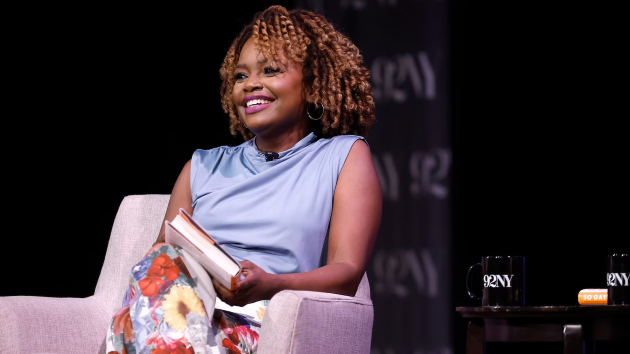
Karine Jean-Pierre, who became an independent after serving in the Biden administration as White House press secretary, told ABC News that she believes the growing percentage of independents is not “temporary” and will continue to reshape the electorate in this 2026 election year.
“I do think there’s power amongst independents. The thing that is changing the electorate is changing in the sense of that you’re seeing more and more independents,” Jean-Pierre told ABC News.
Jean-Pierre also noted that younger generations may be reluctant to join a political party as a way to “express moral concern” over U.S. involvement in global issues.
She also noted that young independents deserve a seat at the table as the midterms approach.
“I don’t think independents, especially young independents, are disengaged,” Jean-Pierre said. “I think what they’re doing is they’re growing numbers — put pressure on both political parties to earn support with real policy results, rather than just assuming loyalty based on branding or identity.”
The Gallup poll was conducted throughout 2025 among 13,454 U.S. adults nationwide and has a margin of error of +/- 1 percentage point.
Copyright © 2026, ABC Audio. All rights reserved.